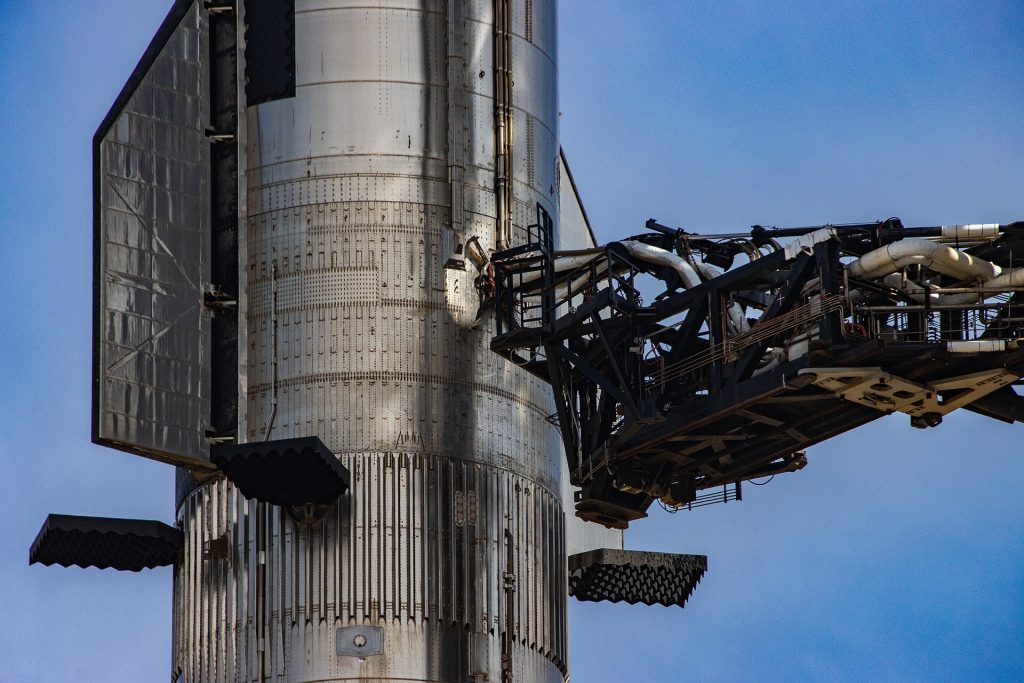
Featured image: Starship fully stacked at Starbase, Texas. Photo: Jenny Hautmann, via Wikimedia Commons (CC BY-SA 4.0).
Clear your afternoon. Later today — Friday, November 13 — SpaceX flies Starship for the 15th time from Starbase, Texas, and this is the flight the company has been building toward for years: an attempt to catch both stages of the rocket back at the launch tower. If it works, it will be the first time in history an entire orbital launch system has been recovered after a mission — what SpaceX itself calls the holy grail of rocketry.
When to watch (Pacific time)
- Webcast begins: about 2:03 p.m. PT (42 minutes before launch), live on spacex.com and on X at @SpaceX.
- Launch window: opens 2:45 p.m. PT (4:45 p.m. CT) and runs 75 minutes, from Pad 2 at Starbase.
- Booster catch: about 6½ minutes after liftoff — Super Heavy Booster 22 flies back to Pad 2 and is caught by the tower’s “chopstick” arms. It is the first catch attempt for a next-generation V3 Super Heavy booster.
- Ship catch: tomorrow — Saturday, November 14, around 1:17 p.m. PT — if the flight goes the full 22½ hours.
The FAA granted the flight license this morning, clearing the last regulatory hurdle.
The plan
Booster 22’s part is over in minutes. Ship 42 has the long day: it will climb to an orbit about 275 kilometers up, deploy 26 next-generation Starlink V3 satellites starting roughly 35 minutes into the flight, then coast through about 14 orbits. Three of those satellites carry cameras to inspect the ship’s heat shield in orbit — the pictures help controllers decide whether the vehicle is healthy enough for what comes next.
If the checks pass, Ship 42 fires its engines to leave orbit, belly-flops through re-entry, flips vertical and drops into the same tower arms, about 22½ hours after launch. If anything looks off, SpaceX skips the catch and sends the ship to a controlled splashdown in the Pacific, off Hawaii or Chile. Nothing about the return is guaranteed — the company is explicit that the catch happens only if the ship earns it. (Eagle-eyed watchers have also spotted the ship’s unofficial motto for the day: a “Don’t Panic” marking, borrowed from The Hitchhiker’s Guide to the Galaxy.)
Why it matters here
SpaceX was founded in Hawthorne, and the satellites riding on this flight are the other half of the Starlink story AltaPasa covered this morning: the V3 satellites are too big to fly efficiently on Falcon 9, so Starship is the truck the next-generation constellation depends on — the same network now serving rebuild sites and foothill homes around Altadena and Pasadena. (See: Internet From Orbit: What Starlink Actually Offers Pasadena and Altadena.) A rocket that comes back whole — booster and ship, caught out of the sky by the tower that launched them — is what turns those satellites from a trickle into a flood.
SpaceX has also posted the fourth episode of its Starship docuseries, “Go for Orbit,” going inside Starship’s first orbital flight. Watch the webcast, watch the skies over Texas, and check back — if both catches land, today and tomorrow will be dates spaceflight history keeps.
Sources: SpaceX flight announcement and mission description (Nov. 13, 2026); Spaceflight Now and NASASpaceFlight flight previews; FAA license grant reported Nov. 13, 2026. Times converted from Central to Pacific.
