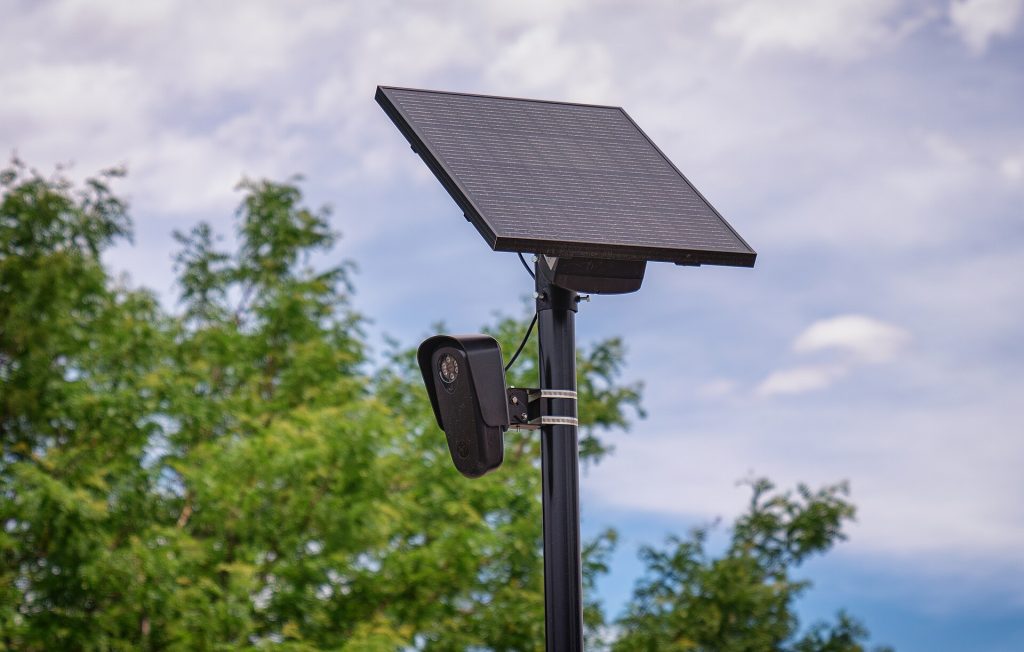
You have probably driven past them: small solar-powered cameras on poles at intersections, quietly photographing the license plate of every car that passes. They are Flock Safety’s automated license plate readers (ALPRs), and more than 100,000 of them are now operating across the country. This week, TechCrunch counted at least 10 local governments that have moved since summer to curb, restrict or end their Flock contracts — and Pasadena and Altadena are each, in very different ways, part of that story.
Pasadena: 61 cameras, an audit, and a split committee
Pasadena’s network is one of the largest in the region. The City Council approved the contract with Flock Group Inc. on July 17, 2023, starting with cameras at 17 intersections. The Police Department now operates 61 fixed Flock cameras, and it has sought 11 more, which would bring the total to 72. (The department separately runs a legacy Motorola Vigilant system of 11 fixed cameras in the Rose Bowl corridor.)
The scale of the data is striking. In a recent 30-day period reported on the department’s public transparency portal, the cameras logged 1,018,754 unique vehicle detections, and officers ran 500 searches. Data is retained for 30 days, and department policy prohibits using the system for immigration enforcement, harassment or personal purposes; searches are supposed to carry a legitimate law-enforcement reason.
The program got a formal review this year. The Independent Police Auditor’s report to the Community Police Oversight Commission, dated July 9, 2026, concluded the program complies with state law and department policy, and found no evidence the cameras were used for immigration enforcement or that locations were chosen on the basis of race or ethnicity. One change did follow the scrutiny: after reporting that Pasadena’s plate data had been accessed by outside agencies — including, organizers say, the FBI and ICE through a regional fusion center — the department on June 18, 2026 cut off the Northern California Regional Intelligence Center’s (NCRIC) access to its data.
The local backlash has been organized and loud. On August 19, more than 100 residents rallied on the steps of City Hall under the banner “DeFlock Pasadena,” organized by the group Pasadena Privacy. Critics note the cameras are concentrated in Council Districts 3 and 5, while Districts 4 and 7 have none. The council committee that will shape the contract’s future is split: Public Safety Committee chair Vice Mayor Jess Rivas has favored terminating the contract without a replacement vendor, while Councilmember Steve Madison has supported keeping the cameras with adjustments to the rules. The current contract runs until September 25, 2027, so the decision lands next year.
Pasadena’s neighbors have already moved: South Pasadena chose not to renew its Flock contract and began removing cameras in March 2026, and the LAPD let its contract covering 138 cameras lapse in July 2026 while it negotiates new safeguards over data ownership and access.
Altadena: donated cameras, no public input, and a murky status
Altadena’s cameras arrived a different way. In February 2025, weeks after the Eaton Fire, Flock donated 50 Flock Falcon plate readers to the Los Angeles County Sheriff’s Department for use in Altadena, software and installation included. They went up without any notice to the Altadena Town Council — and when two council members, Anton Anderson and Isis Moulden, went looking this year for a record of public input on the cameras, they found none.
Where things stand now is genuinely unclear. A Sheriff’s Department commander said in May 2026 that the Altadena Flock contract had ended and the cameras were decommissioned, and Town Council Chair Nic Arnzen confirmed the cameras are off — though the poles remain, with no plans to remove them while feedback is gathered. Yet at the Town Council’s September 15 meeting, Anderson reported 70 plate readers in Altadena — 40 Flock and 30 Motorola (77 counting the community’s borders) — said a new contract is being negotiated, and described the data retention policy as “TBD, still being worked out and a little bit murky.” The Sheriff’s Department declined to give the council members specific camera locations. A Town Council survey of residents found 73% opposed to the cameras, and Arnzen has announced a community meeting on them — with the Sheriff’s station captain, Flock representatives and possibly the county — though no date had been set. In October, Altadena residents were still taking their opposition to the county’s Sheriff Civilian Oversight Commission.
The national wave — and Sacramento’s shrug
TechCrunch’s November 5 tally of the backlash lists Monroe, Ohio; Newburgh, New York; Richmond, Virginia; Hopkinton and New Bedford, Massachusetts; and Lansing, Michigan among the places that have moved to end Flock contracts since summer, with Asheville, North Carolina, the El Paso County Sheriff in Colorado, and South Windsor, Connecticut also on the list — and voters in League City, Texas voting this week to remove their police department’s plate readers. The concerns repeat everywhere: mass surveillance, who the data is shared with (reports that federal immigration agents queried local plate data sit at the center of it), and plain misuse — this year an officer in Missouri was accused of using Flock to stalk his ex-wife, and an East Texas officer was sentenced to prison for using it to stalk his ex-girlfriend.
Flock’s response, given to TechCrunch: every customer owns its data and controls how it is shared, the company does not sell data, and it has no contract with ICE. In August, Flock shortened the default data-retention period for new customers from 30 days to seven, and began requiring a case code for searches. In Congress, Rep. Thomas Massie’s “Flock-Off Act” and a “Ban Flock Act” from Sen. Bernie Sanders, Rep. Alexandria Ocasio-Cortez and Sen. Jeff Merkley are both pending. In Sacramento, Senate Bill 1013, which would have limited how police use and share plate-reader data, died in the Assembly in September without a floor vote — the fifth straight year California has failed to regulate the technology.
What to watch
Three things: whether Pasadena’s council turns this year’s audit and argument into guardrails — or an exit — well before the September 2027 contract deadline; whether Altadena ever gets the public process it skipped in 2025, starting with the promised community meeting and a straight answer on what contract is being negotiated and whose data the remaining readers collect; and whether Sacramento or Congress acts before the local contracts simply renew themselves. We took a longer look at the Pasadena backlash in August here.
Sources: TechCrunch (Nov. 5, 2026); Independent Police Auditor review of PPD’s Flock ALPR program for the Community Police Oversight Commission (July 9, 2026); Pasadena Police Department Flock transparency portal, via Parriva; Altadena Now (Sept. 15–16, 2026); The LA Globe / L.A. TACO; ABC7; Pasadena Privacy.

3 Comments