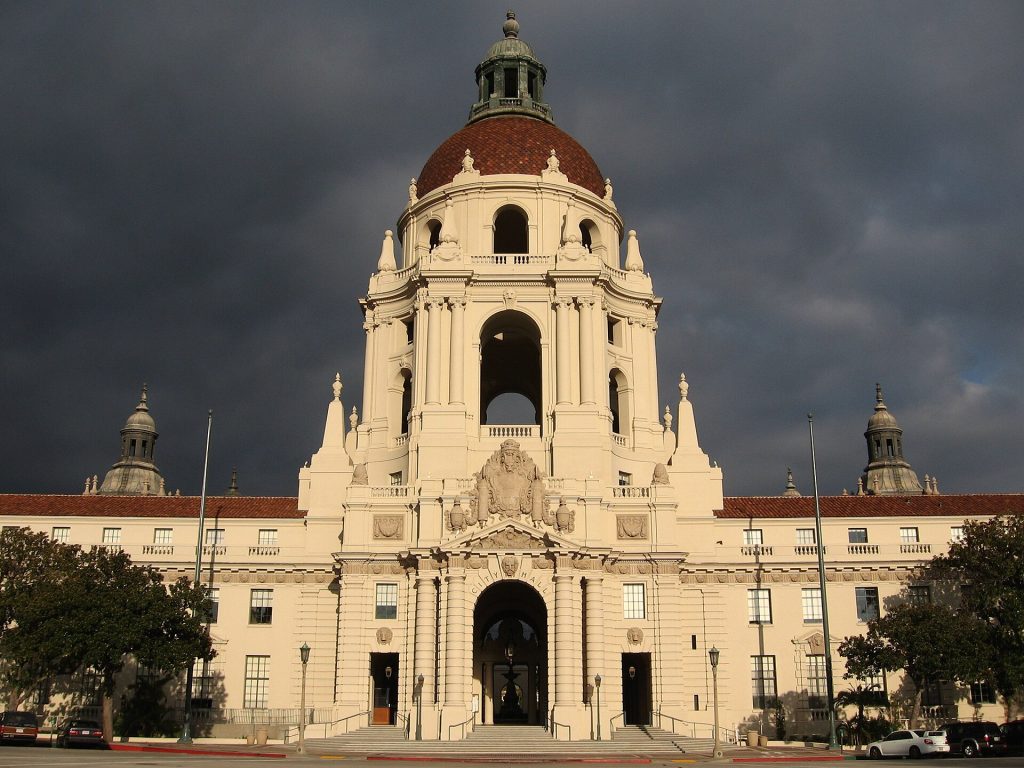
An open letter to Mayor Victor M. Gordo and the members of the Pasadena City Council, regarding Items 16 and 17 on the Tuesday, November 10, 2026 council agenda — the Phase 1 contract for the hydrogen fueling station, and the resolution to join the First Public Hydrogen Authority.
Dear Mayor Gordo and Members of the City Council,
I write as a Pasadena resident ahead of Tuesday’s meeting to urge you to reject Item 16, the first-phase contract for the hydrogen fueling station for Pasadena Transit buses, and Item 17, the resolution to join the First Public Hydrogen Authority — and to support the position Councilmember Rick Cole has laid out for his constituents. The Department of Transportation will present this as the routine completion of decisions already made. It is not. It is the moment the Council locks in the most expensive possible version of a transition the state does require — but does not require us to do this way.
The state mandate does not require hydrogen. CARB’s Innovative Clean Transit rule requires zero-emission buses. It does not require fuel cells. The 2023 rollout plan that chose hydrogen for Pasadena Transit was the Department’s own recommendation, sold to this Council on cost and fuel assumptions that have already failed: Item 16 asks you to award $6,884,770 to Clean Energy Fuels Corp. for Phase 1 design-build services alone, on a station project now priced above $23 million — $6 million above the estimate presented earlier this year — before a single gallon of hydrogen has been priced. Battery-electric satisfies the mandate — the Department knows it, because it chose battery-electric for Dial-A-Ride, and its one battery-electric bus has been in service since May 2025. Hydrogen was a staff choice, not a state requirement, and it should be re-examined like one.
The buses already in production are an argument against PDOT’s judgment, not for its plan. Yes, 17 fuel-cell buses are on order. That is what happens when a department commits to vehicles before it has secured the fuel, the fuel’s price, or the station to dispense it: the city ends up holding assets it cannot use unless it approves the next, larger check. A mistake in the tens of millions does not justify compounding it into a roughly $70 million five-year commitment — buses, station, and fuel — with decades of the most expensive fuel in transit on the other side. The question on Tuesday is not whether the first mistake was made. It is whether the Council will keep paying for it.
“Green hydrogen is available locally” is not an answer; it is a slogan. Available at what price, under what contract, for how long? Staff has never placed a contracted, affordable green hydrogen price before this Council — and Item 16’s own recommendation concedes it: the forecasted hydrogen-supply costs will not be presented until staff returns for Phase II, after the design money is spent and the city’s leverage is gone. You are being asked to build the station first and discover the fuel cost afterward — and every dollar of that fuel cost comes out of the transit budget, on top of the $3 million already being taken from transit operating funds to cover the station’s overrun. In a city facing Pasadena’s budget challenges, with great needs competing for every dollar, spending this kind of money — and this much staff time and consultant money chasing it — is a fool’s errand.
The grant money does not make this free, and the project is already behind on its own terms. The station’s funding is principally a state TIRCP grant matched with more than $10 million in local Prop A and Prop C transit funds — real local money that could run buses. Grants pay for construction; they do not pay for decades of fuel, operations, and maintenance, which land on Pasadena. The overall program is priced at $150.7 million against the $100 million-plus in grants the Department cites, leaving tens of millions in local exposure, and the future of the federal funding behind later phases is genuinely in question.
And this Department’s estimates have a track record the Council should weigh. The Transit Operations and Maintenance Facility — the other half of this same zero-emission program — was priced at about $30 million in the FY 2022 capital program, $62.4 million in the 2022 Measure R project list, and $100 million in the current capital program; staff’s own presentation this September put the forecast near $91 million, with roughly $18 million still unfunded and another request to Metro planned for more money. The fuel-cell buses themselves, approved at $32 million barely a year ago, already needed a $2.4 million “cost adjustment” grant this past July. A station promised for 2027 is now contemplated to finish construction at the end of 2029, after this Department went to the California Transportation Commission for a 12-month extension because it could not award its contract on time — so the buses will arrive with nowhere to fuel, and the Council is told the only answer is to approve the next phase faster. Every number this Department has given this Council on this program has grown, and every date has slipped.
Meanwhile, look at what goes begging. This same week, Pasadena is learning that Measure PFD — the measure that would fund its fire protection needs — will likely fall a few hundred votes short of the two-thirds it requires, even with nearly two-thirds of voters saying yes. Fire Stations 33 and 37 still have to be dealt with; as Councilmember Hampton put it this week, doing nothing is simply not an option — and the city will now have to find the money from reserves, grants, and financing it has not identified. That is Pasadena’s real queue of needs. A city that cannot fund its fire stations should think very hard before committing tens of millions in local funds — and $3 million out of transit operations — to the most expensive fuel experiment in its history.
And a word about this Council’s own responsibility. The rollout plan, the bus purchase, and every step since were approved by this Council, on the Department’s representations. Verifying those representations was never the staff’s job — it was yours. A council that accepts the assumptions behind a $150.7 million program without independent scrutiny has not simply been misled; it has declined to look. One member of this Council did the reading, asked the hard questions, and has stood largely alone for more than a year while the rest went along with the Director. Tuesday is this Council’s chance to do the job it was elected to do — before the next, larger check is written, not after.
I therefore ask the Council to:
- Vote no — or at minimum defer — Item 16 on Tuesday, and decline Item 17’s Hydrogen Authority membership until the fuel economics are public;
- Order an independent review, not conducted by the Department of Transportation, comparing the total cost of ownership of the hydrogen path against a battery-electric path over the same horizon;
- Require staff to present a contracted green hydrogen fuel price and a costed plan for the 17 buses already on order before any station award returns to the Council; and
- Protect transit operating funds for service, not for subsidizing an unproven fuel.
Councilmember Cole has raised these concerns for more than a year, largely on his own. He is right on the facts and right on the finances, and he deserves the Council’s support — and its votes — on Tuesday.
Respectfully,
Victor Caballero
Pasadena, California

1 Comments