Updated Saturday afternoon with photos and details from the keynote and the panel.
The Caltech Entrepreneurs Forum spent Saturday morning on the trillions of microbes that live in the human gut — what they do to the aging brain, and what it would take to turn that science into diagnoses, treatments and companies. “The Microbiome Connection to Aging” filled its usual room at the Cahill Center for Astronomy and Astrophysics, with coffee and networking from 9:00 a.m. and the program at 10:00.
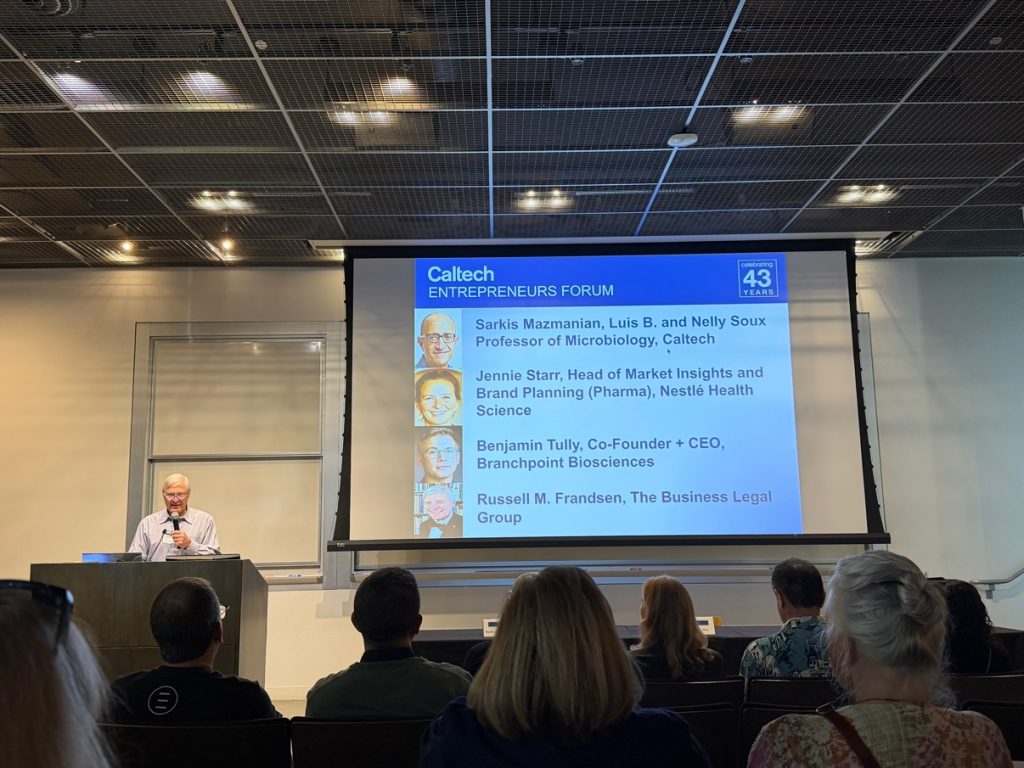
Featured photo: the session’s speakers, on screen at the Cahill Center on Saturday morning. Photos: Victor Caballero.
The morning opened with a welcome from producer Lynn Foster, founder and CEO of Z-Field Technologies, and then the keynote at 10:15: Sarkis K. Mazmanian, Caltech’s Luis B. and Nelly Soux Professor of Microbiology and Merkin Institute Professor, whose lab has been central to showing how gut microbes influence the brain.
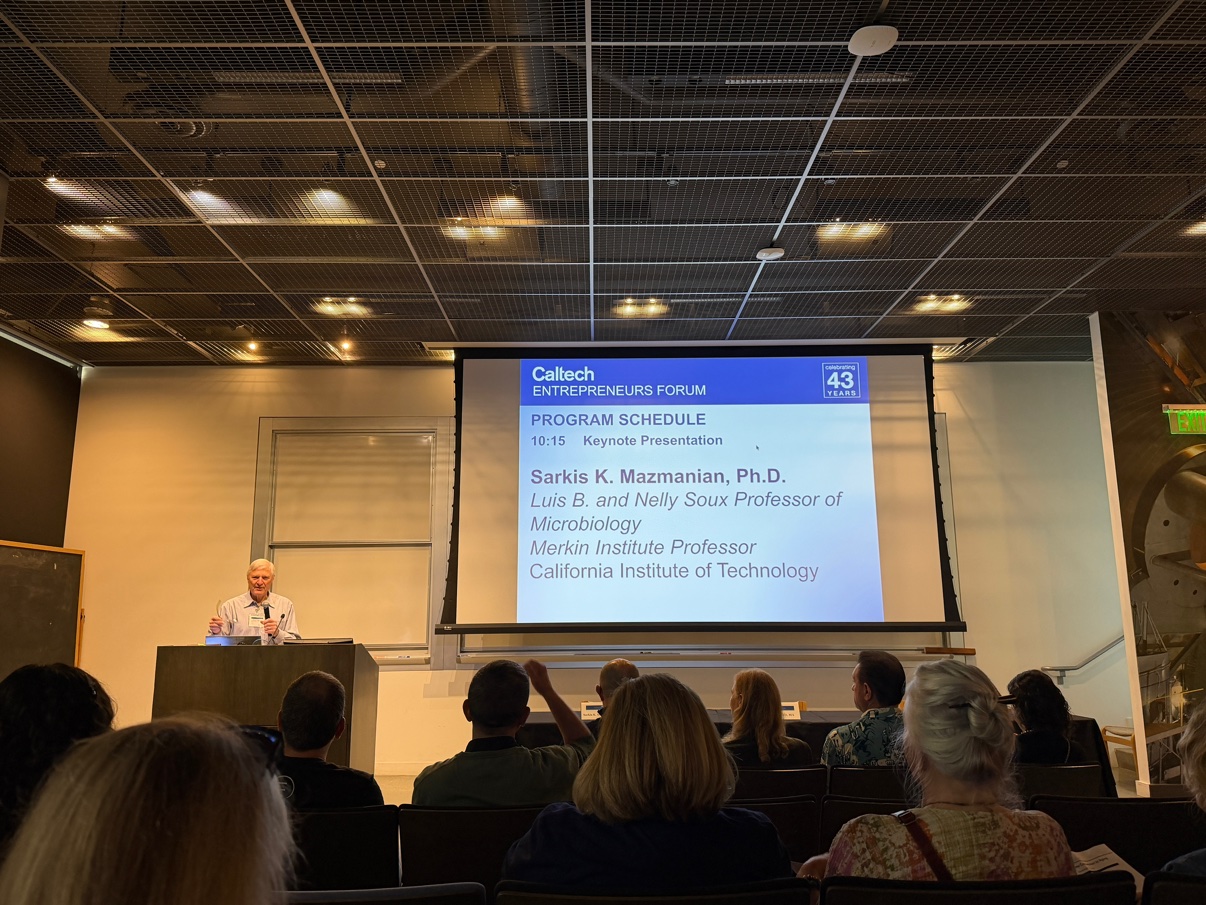
The program slide for Mazmanian’s keynote. Photo: Victor Caballero.
The keynote: treat the gut, not just the brain
Mazmanian’s argument fit on one slide: today’s neurodegenerative drugs aim at the brain and must cross the blood-brain barrier; the future approach his lab is pursuing targets the gut instead. One slide, adapted from Felice et al. (Parkinsonism and Related Disorders, 2016), laid out how Parkinson’s disease pairs gut problems — gastrointestinal disturbances, slowed motility, constipation, pain — with depression, anxiety and behavioral changes, and how microbiome-based interventions — prebiotics, probiotics, drugs, fecal microbiota transplant — are being explored to ease both sides of that picture.
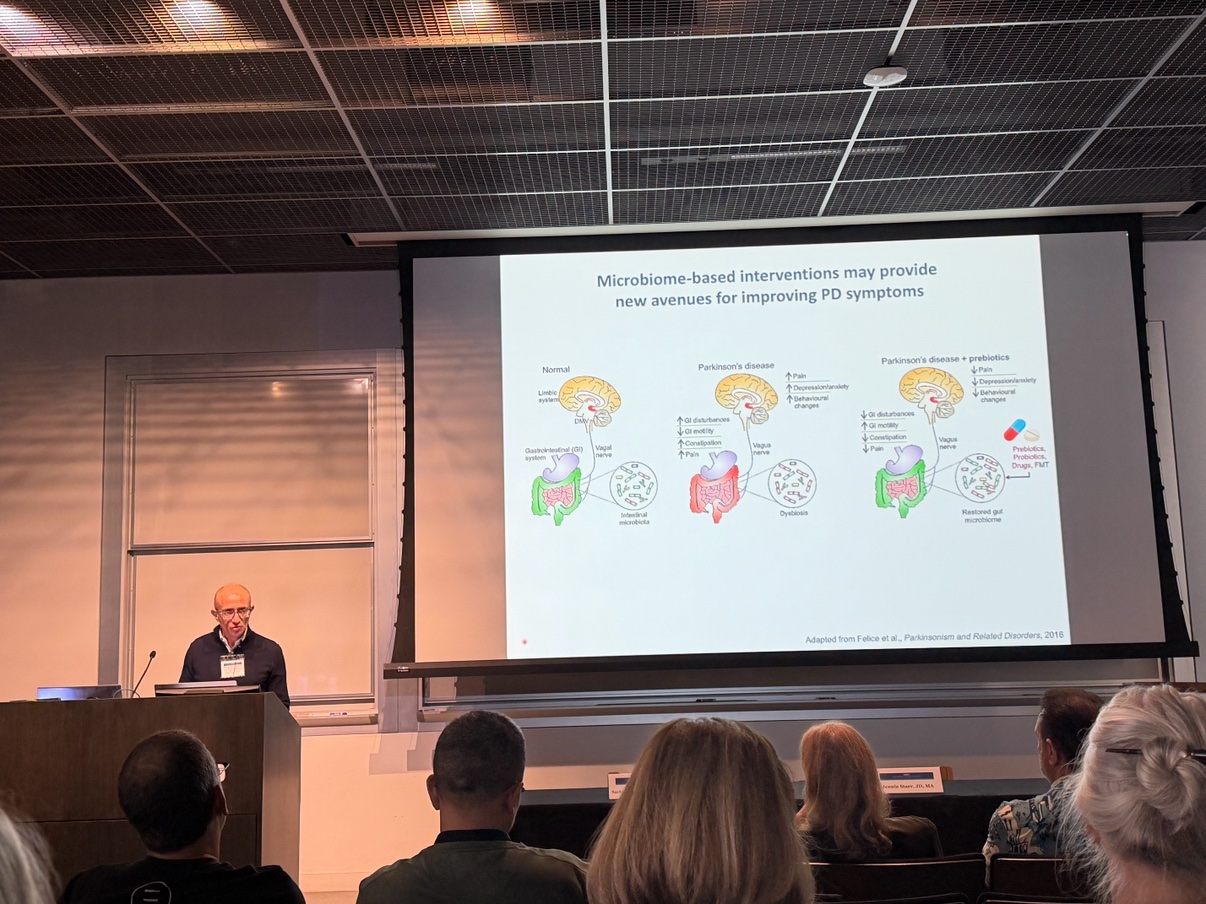
Mazmanian at the podium, beside his slide on microbiome-based interventions for Parkinson’s symptoms. Photo: Victor Caballero.
The research is already in the clinic, through a company he co-founded. His slides carried the May 19, 2026 announcement that Vertero Therapeutics had advanced its drug VT-5006 into a Phase 1b study for the treatment of Parkinson’s disease, with the first participant dosed at the Centre for Human Drug Research in the Netherlands. His acknowledgments slide disclosed that he is a co-founder and board member of Vertero, and listed the work’s funders: the National Institutes of Health (NINDS and NIDDK), the Michael J. Fox Foundation, Aligning Science Across Parkinson’s, the Heritage Medical Research Institute and the Department of Defense.
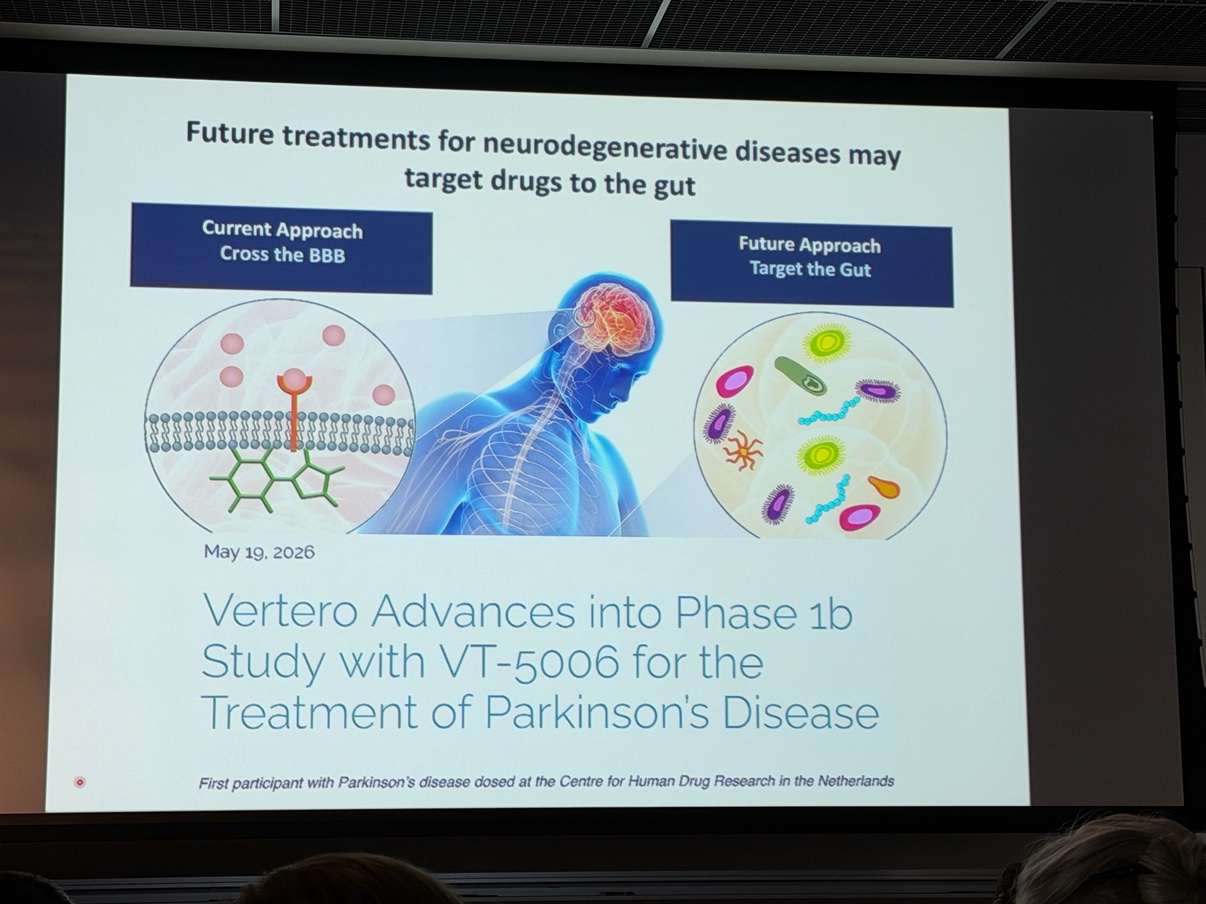
“Future treatments for neurodegenerative diseases may target drugs to the gut” — a slide from the keynote, noting Vertero’s Phase 1b Parkinson’s study. Photo: Victor Caballero.
Why the gut, why aging
The Forum framed the session this way: the microbiome — trillions of gut bacteria and other microbes that drive health and the immune system — has been called a “second brain,” and it plays an important role in aging and brain function. The research question now is whether reading, and eventually steering, that microbial community can help diagnose and treat neurodegenerative diseases such as Parkinson’s. That is the territory of Mazmanian’s research program, and it is also a business question, which is where the panel came in.
The panel: science meets the market
The 10:45 panel paired Mazmanian with two people who think about the microbiome commercially. Jennie Starr, head of market insights and brand planning for pharma at Nestlé Health Science, brought the large-company view of what the market will actually adopt. Benjamin Tully, co-founder and CEO of Branchpoint Biosciences, represented the startup side: his Los Angeles company builds qPCR-based microbiome profiling tools — quantitative assays meant to make measuring a microbial community faster, more precise and cheaper than sequencing. Russell M. Frandsen of The Business Legal Group, the session’s co-producer, moderated. An audience Q&A followed, and the program closed at noon into networking.
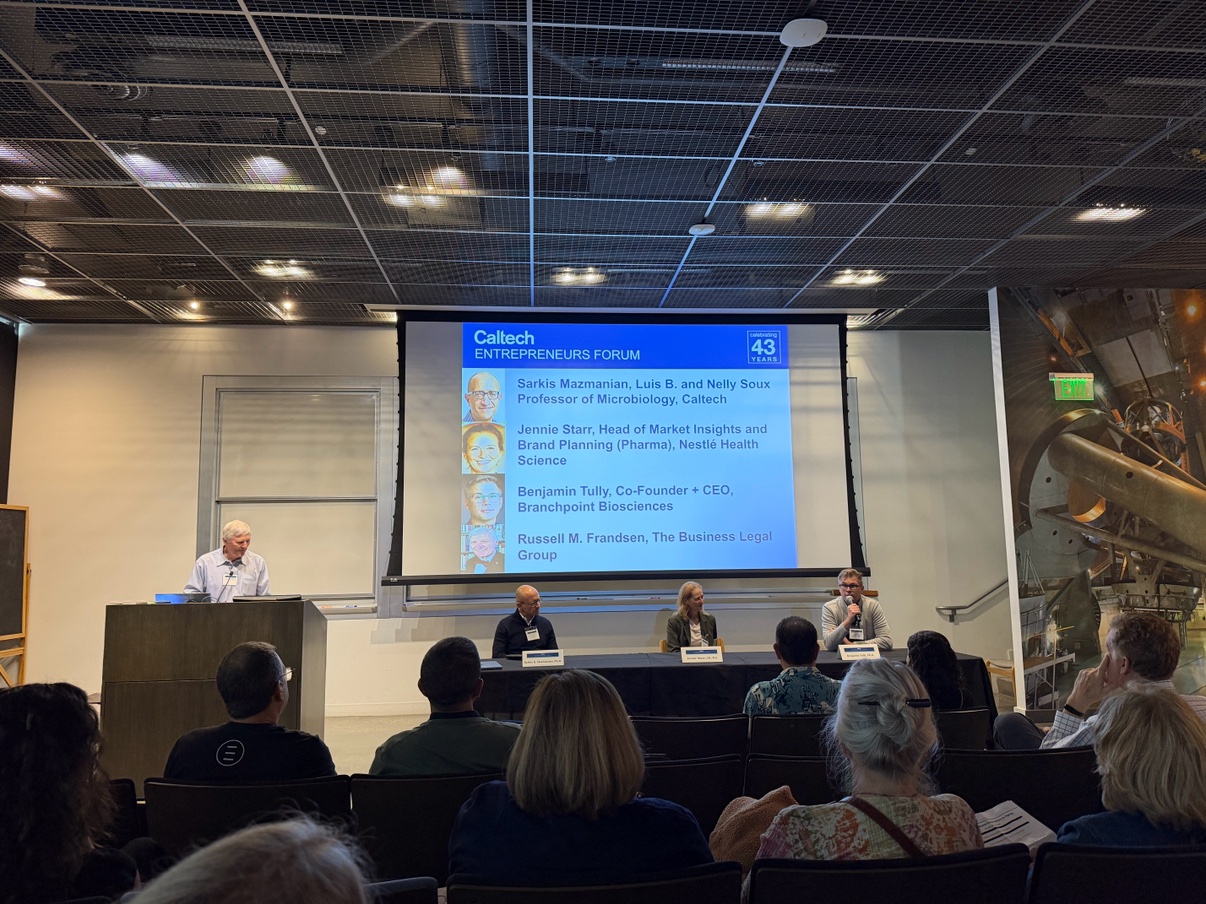
The panel seated at the Cahill Center, with the session’s speakers on screen. Photo: Victor Caballero.
Starr also presented on her own: “The Nuts and Bolts of Successful Collaborations,” on setting up industry partnerships so they expand rather than stall.
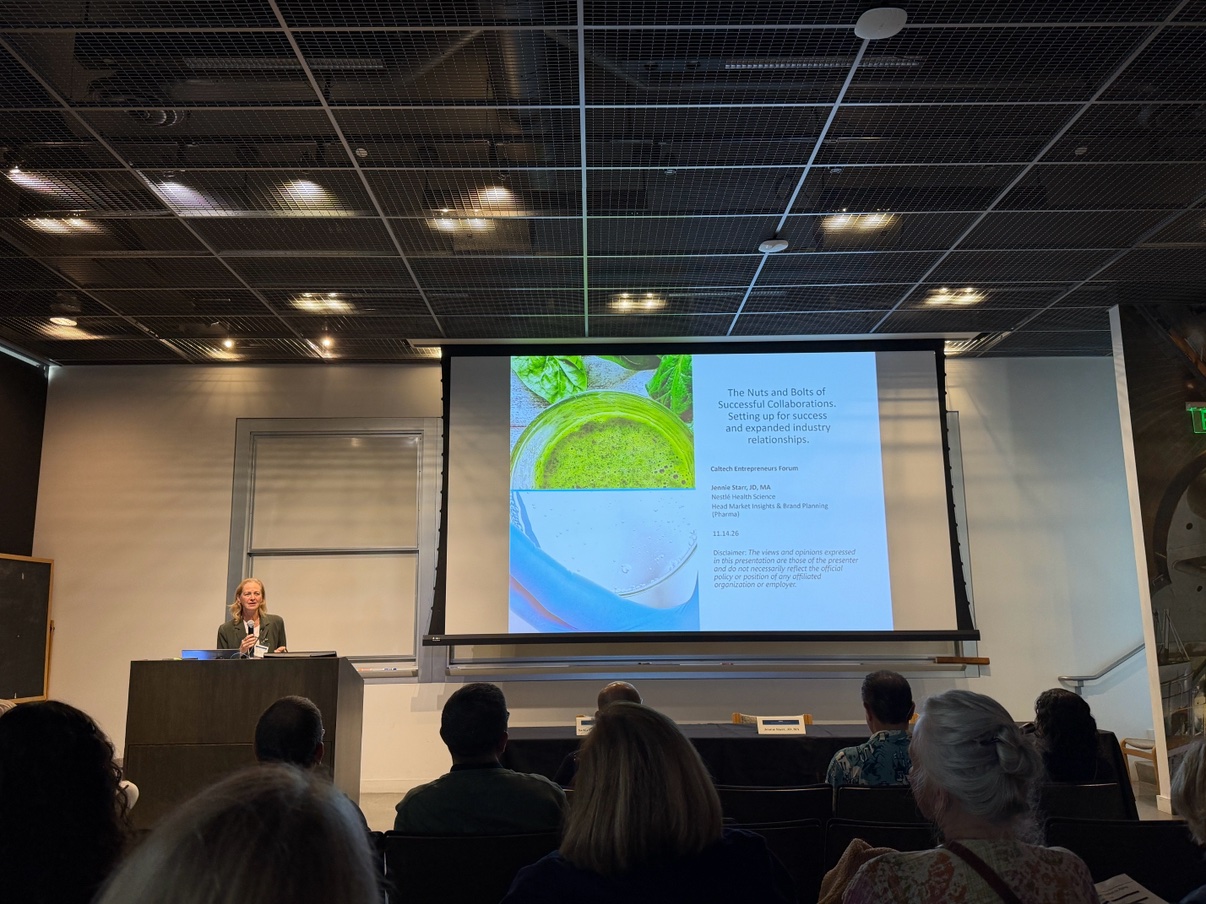
Jennie Starr presenting “The Nuts and Bolts of Successful Collaborations.” Photo: Victor Caballero.
The panel’s “Path to Commercialization” slide sorted the microbiome business into five lanes. Consumer probiotics and cosmetic products move fast, with low regulatory complexity — Seed Health and ZBiotics; Mother Dirt and Gallinée. Agricultural and veterinary products sit in the middle — Pivot Bio and Indigo Ag; BiomEdit and Native Microbials. Pharmaceutical products are slow and highly regulated — the lane occupied by Nestlé Health Science and Vedanta Biosciences. And a “Key Challenges” slide named the friction honestly: curiosity-driven science versus return on investment; a thin understanding of intellectual property where microbes are concerned, and of how drugs are regulated differently from probiotics; data-sharing and IP ownership; aligning with existing research-ethics boards; publication versus confidentiality; and a lack of standards and reproducibility.
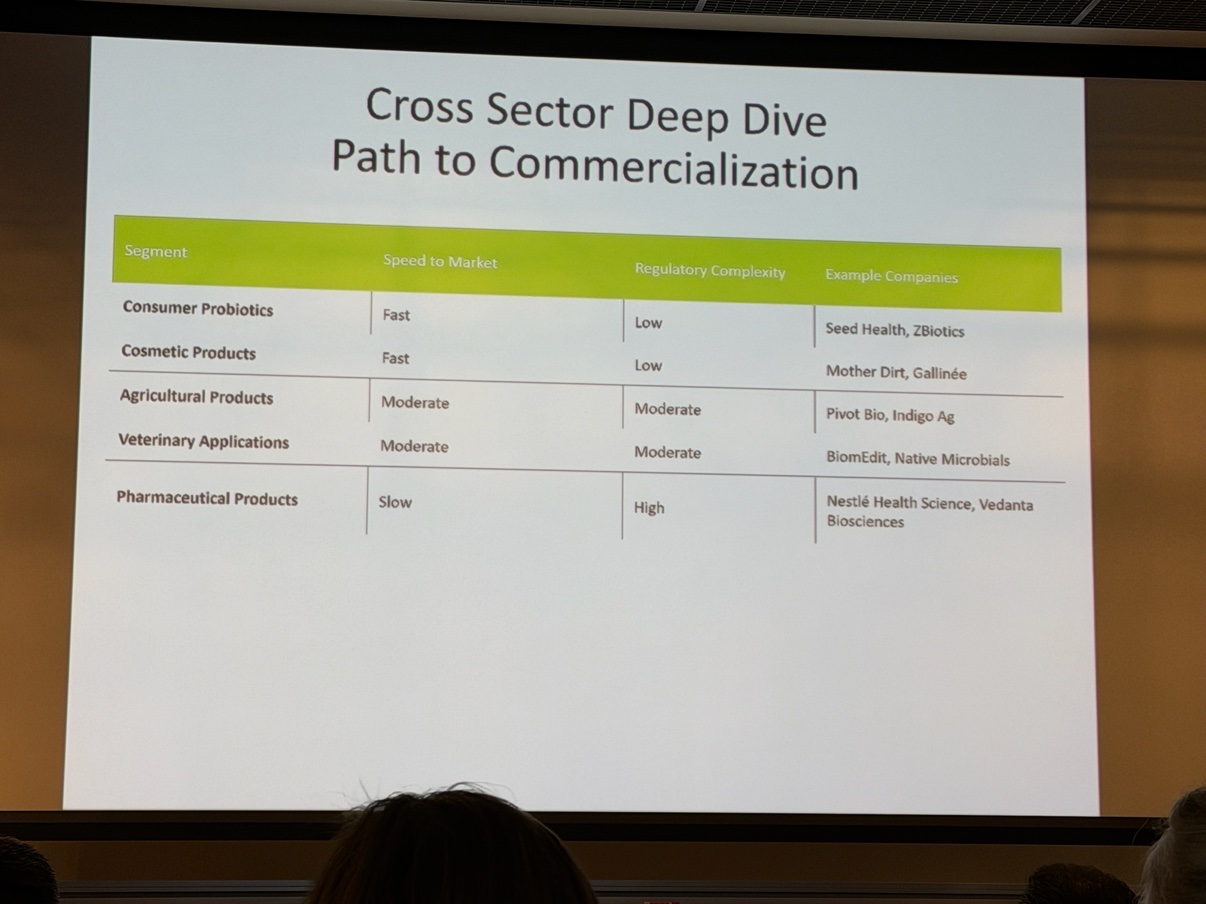
The panel’s “Path to Commercialization” slide: five microbiome market segments, by speed to market and regulatory complexity. Photo: Victor Caballero.
What’s next
The Forum — which bills itself as celebrating 43 years, and has been running since 1984 under Caltech’s technology transfer office — closed by announcing its next session: “Ubiquitous Computing,” on Saturday, January 23.
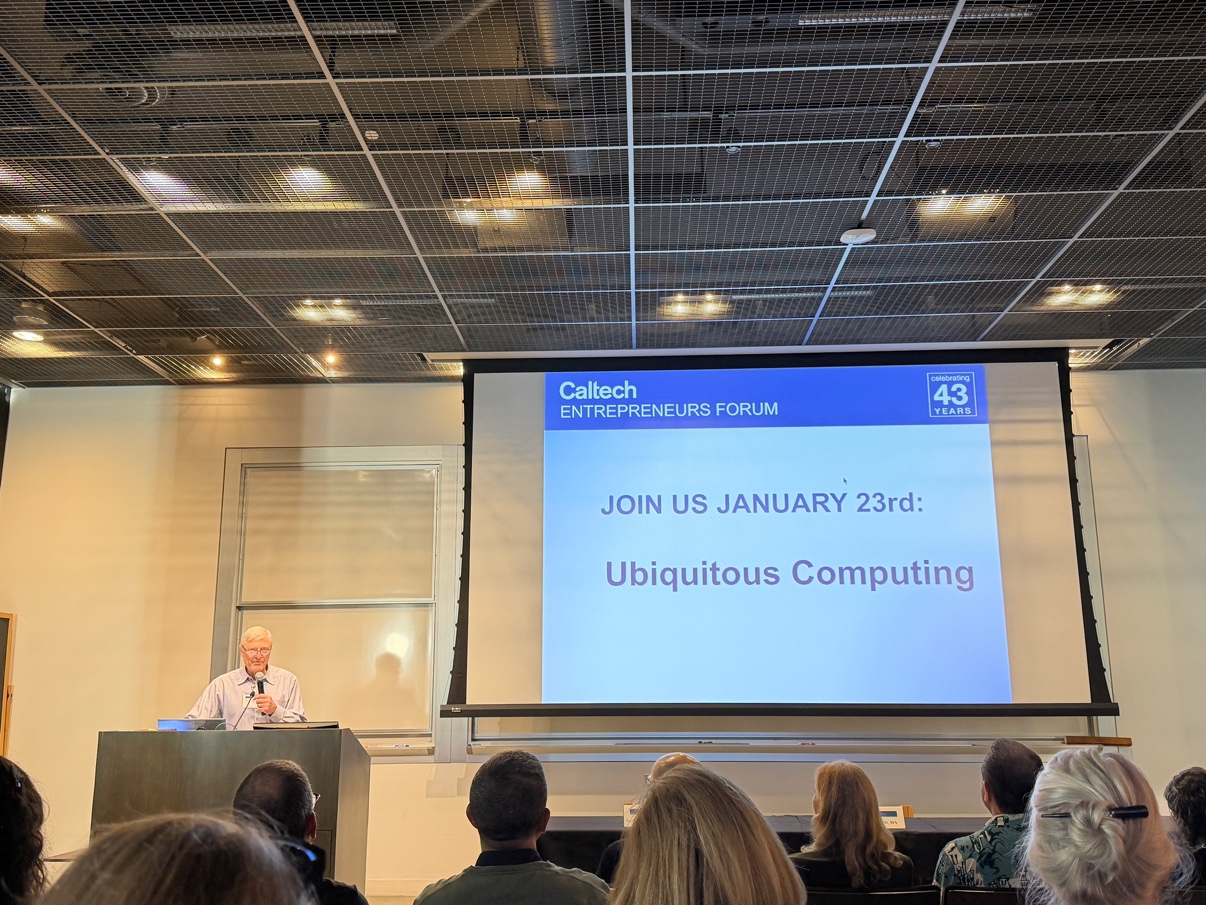
The next Forum session, announced Saturday: “Ubiquitous Computing,” January 23. Photo: Victor Caballero.
And if Saturday’s science was the draw, Mazmanian returns to the same subject across campus in three weeks: his Watson Lecture, “Trust Your Gut: Microbiome Influences on Brain Health and Disease,” is Wednesday, December 2 at Beckman Auditorium — free, with advance registration already full and a standby line the way in. AltaPasa’s preview of Saturday’s session, with registration details and the full background, is here.
Sources: the printed program and the presentation slides at the Caltech Entrepreneurs Forum, Cahill Center, November 14, 2026 (photographed at the event); Caltech Entrepreneurs Forum (entforum.caltech.edu); Branchpoint Biosciences.
