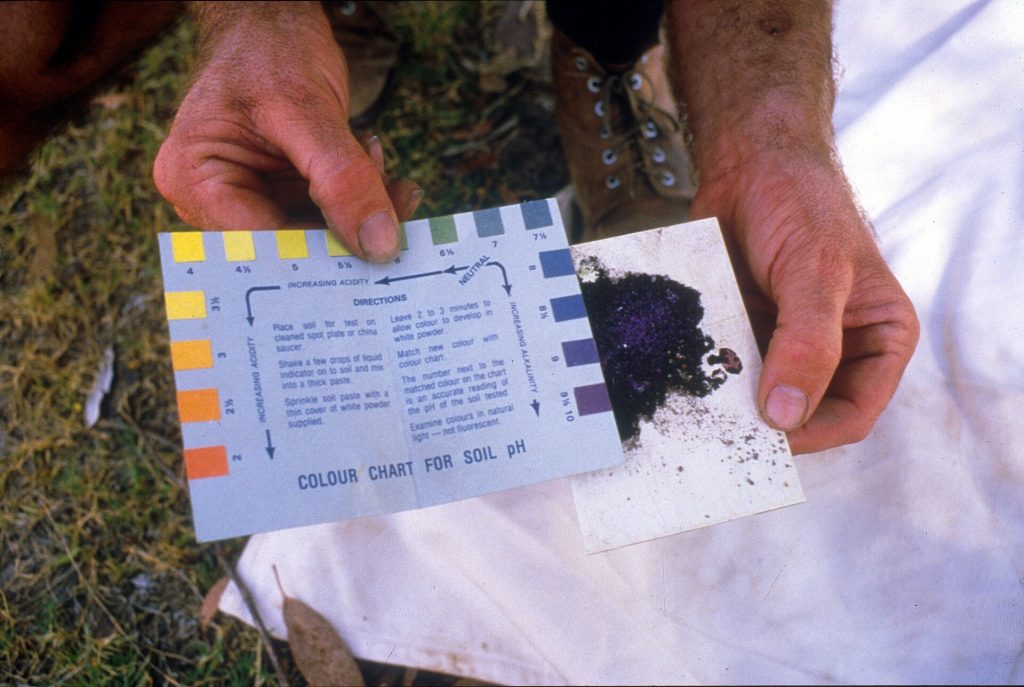
Featured photo: soil testing in the field. Photo by CSIRO, CC BY 3.0, via Wikimedia Commons.
If your home stands in unincorporated Altadena or Pasadena and the Eaton Fire left lead in your yard, the county will pay to test it and clean it — but the application window is nearly closed. The Los Angeles County Development Authority’s New Roots Eaton Canyon Pilot Program provides up to $60,000 per approved property for testing and cleanup of lead-contaminated bare soil, at no cost to the homeowner. Applications close Wednesday, November 25, 2026, at 12:00 p.m.
Who can apply
The pilot is limited to owner-occupied primary residences in specific zip codes in unincorporated Altadena and Pasadena. Applicants must have lived at the property as their primary residence since January 7, 2025 — the day the fire started. The program site has an eligibility tool to check your address: newroots.lacda.org.
Not eligible: rental properties (renters cannot apply at this time), multifamily or commercial properties, homes that are uninhabitable, vacant lots, properties outside the eligible area, and condominiums or townhomes where an association or another entity owns the land.
Only about 20 homes — and there’s a priority order
The county has allocated $1,000,000 for testing, remediation and administration, and expects to remediate approximately 20 properties. Eligibility does not guarantee selection. When applications exceed the money, LACDA prioritizes, in this order:
- Households with a pregnant household member
- Households with children under the age of six
- Households with children under six who regularly visit the home
- Households with a member with elevated lead levels in their blood
- Households with children ages 6 through 17
- Households with an elderly person or a person with disabilities
How the cleanup works
LACDA oversees the work from testing through remediation and pays the contractors directly — there is no cost to the property owner. Soil samples go to a certified laboratory for lead analysis. Cleanup, done by licensed and certified lead abatement contractors, typically means removing the top 6–12 inches of contaminated soil and replacing it with clean topsoil, or covering exposed soil with grass, rock or mulch; the new soil is re-tested afterward to confirm it meets EPA-approved safety levels. In most cases the work takes between 1 and 14 days. Homeowners sign an Owner Participation Agreement allowing LACDA and its contractors access to the property.
To apply, you’ll need the online application, a valid government-issued photo ID, a utility bill issued within the last 60 days, and a copy of your most recent property tax notice or recorded deed. If anything is missing, you get a maximum of five business days to provide it — after that, the application is forfeited.
Lead in bare soil has been one of the Eaton Fire’s most persistent health concerns, especially for young children and pregnant people, which is exactly who this pilot puts first. USC’s CLEAN Project circulated word of the program this week but does not administer it. Questions go to LACDA at newroots@lacda.org or (626) 586-1727 — and if you think you qualify, don’t wait for the deadline: apply at newroots.lacda.org.
Sources: Los Angeles County Development Authority, New Roots Eaton Canyon Pilot Program (newroots.lacda.org, read November 16, 2026); USC CLEAN Project community email, November 16, 2026.
