A gift aimed at the people who build the instruments
Foster and Coco Stanback have given Caltech and the Jet Propulsion Laboratory $27.5 million in two gifts, announced November 2, that pay for something both institutions have long talked about and rarely funded: the unglamorous middle step between a good idea and a working piece of space hardware.
The larger gift, $20 million given through the Foundation for the Carolinas, creates the New Space Makerspace at JPL, next to the Lab’s Microdevices Laboratory. The smaller, $7.5 million, renovates and expands Caltech’s hypersonic research facility at the Guggenheim Aeronautical Laboratory and adds a new shock tube for studying flight at extreme speeds.
Both gifts are built to reach students who might never otherwise set foot at JPL or Caltech.
What the makerspace actually does
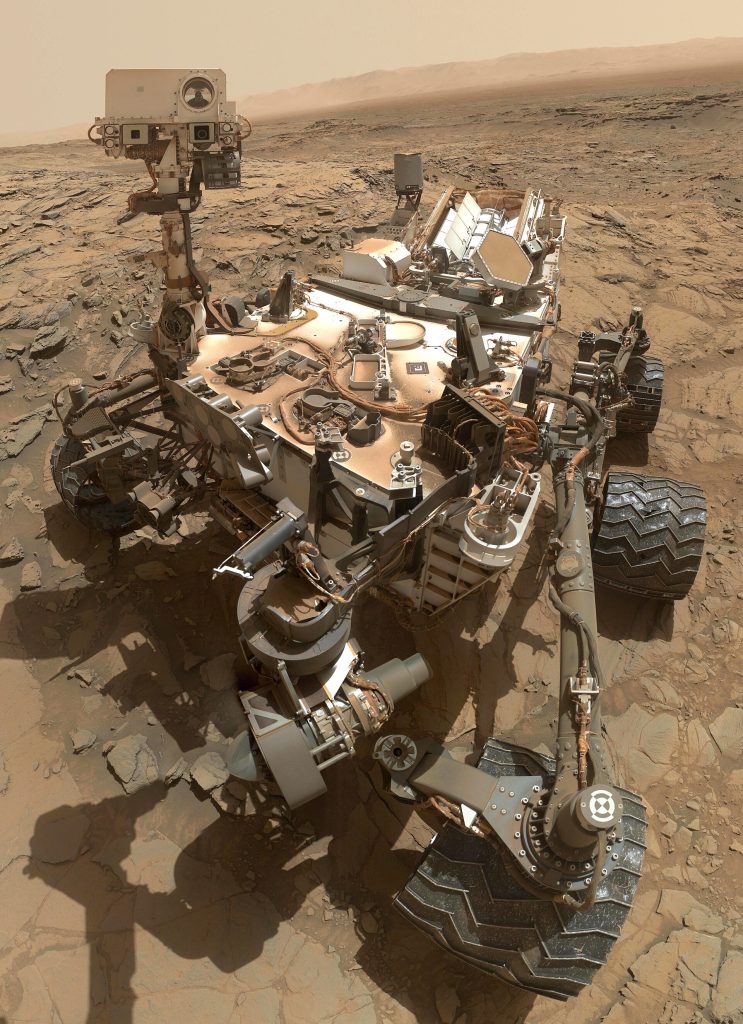
JPL’s Microdevices Laboratory has spent nearly 35 years building the sensors and miniaturized instruments that make space missions possible — including the lasers for the spectrometer aboard NASA’s Curiosity rover, now in its 14th year exploring Mars, and detectors central to NASA’s $1 billion PRIMA mission, which JPL was recently selected to lead.
But turning a new chip into a working instrument requires supporting electronics few academic labs can build themselves, and outside suppliers can charge hundreds of thousands of dollars for a single project — so researchers must pick which inventions ever become complete prototypes.
“This path to progress is slow and painful,” says Harry Atwater, the Howard Hughes Professor of Applied Physics and Materials Science at Caltech.
The makerspace changes that calculation. Its chip-to-board assembly facilities will let students, postdocs, and interns build field- or flight-testable prototypes quickly, and a Makerspace Fellows Program will teach them how a device made in a research lab becomes part of a working system. Interns will come from a range of schools, including community colleges, and work alongside JPL staff.
“You have to play, and you have to push the machines,” says Shouleh Nikzad, JPL’s chief technologist. The makerspace, she says, is a place to try new ideas outside the demands of flight-hardware delivery.
Flight faster than sound, studied on campus
Today, Caltech’s hypersonic facilities support experiments on flight at more than five times the speed of sound, where shock waves generate intense heating that a spacecraft must withstand when entering an atmosphere. The current T5 shock tunnel exposes test models to airflow at about 1,700 degrees Celsius for roughly a thousandth of a second.
The gift expands the facility’s footprint, funds a new shock tube capable of temperatures and flow velocities beyond what T5 can produce, and pays for a complete renovation. The program is led by Joanna Austin, professor of aerospace. Sergio Pellegrino, who leads Caltech’s aerospace department, notes the lab will stay a place where students can conduct experiments and publish them — unlike some laboratories that restrict access or publication.
Why this gift, and why now
The Stanbacks are long-standing Caltech supporters. They funded the Center for Autonomous Systems and Technologies in 2015 and have supported graduate fellowships and the student rocketry group PARSEC.
Foster Stanback is an aviation professor at Cypress College — nominated as a 2027 Orange County Teacher of the Year — and a former aerospace education officer in the Civil Air Patrol. Years ago, he took a promising Anaheim High School student flying and helped him enroll in community college courses; the student went on to a scholarship in aerospace engineering, a JPL internship, and a master’s degree.
“The metric that’s most important to me is people,” Foster says. “If I can walk up to someone who’s been through a program and an internship, and benefited from it, and now they’re thriving, they’ve got a great job — that means everything to me.”
For Pasadena, the upshot is straightforward: two anchor institutions just got the money to train more of the people who build the instruments. The question to watch is how quickly the makerspace and the new shock tube move from announcement to open doors — and how many of those slots reach students from local community colleges.
Sources: Caltech News, “$27.5 Million Gift Expands Aerospace Prowess of Caltech and JPL,” November 2, 2026; Caltech Alumni, November 2, 2026.
