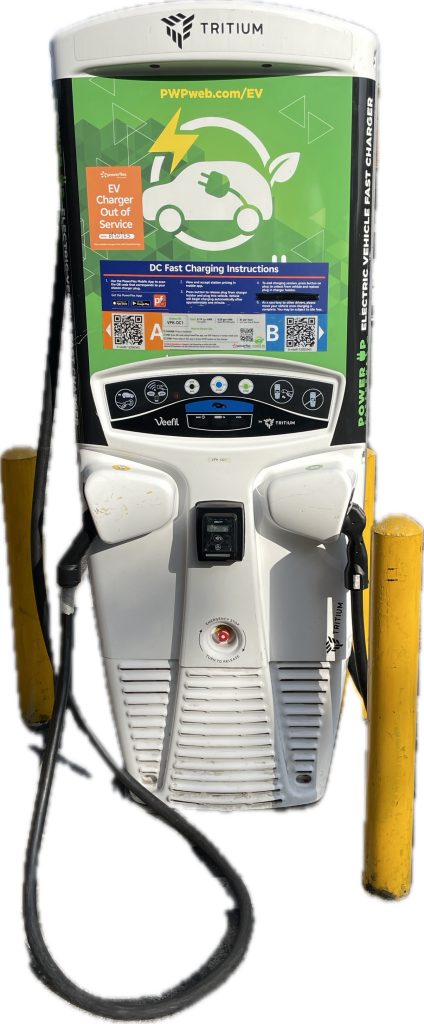
Featured photo: one of Pasadena Water and Power’s Tritium fast chargers at Victory Park (station VPK-DC1), its charging cable cut. Photo: Victor Caballero.
On Thursday, November 6, someone walked up to the electric vehicle fast chargers on the Paloma Street side of Victory Park with a grinder, cut the copper charging cables off two stations — four cables, about eight feet each — and left. The damage is estimated at $30,000. The theft was not reported to Pasadena police until November 9, three days later, at about 11:50 a.m. Police have a limited description — a man estimated at 20 to 30 years old — and, as of the first reports, no arrests.
It is one incident. But it sits at the intersection of two stories Pasadena keeps telling about itself: a city investing heavily in public EV charging, and a city blanketing itself with cameras. Victory Park is where those stories collide — and neither one protected the chargers.
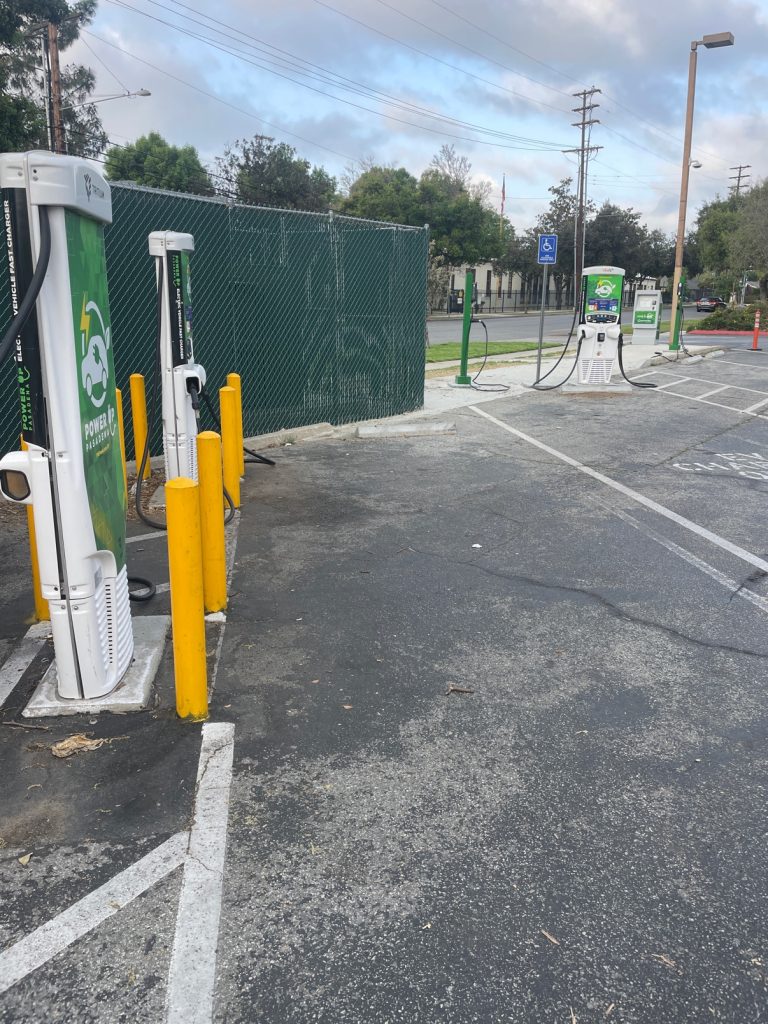
The Victory Park charging lot on Paloma Street — fast chargers in an open, unstaffed lot. Photo: Victor Caballero.
A network the city is proud of — and its soft spots
Pasadena Water and Power has built, in five years, a public network of 45 fast chargers and 116 Level 2 chargers, from the Marengo rooftop depot (2020) to the Arroyo and Shopper’s Lane depots. The Victory Park and Robinson Park charging sites both opened in 2024 — between them, eight city fast chargers and 44 Level 2 chargers, in open park lots. The fast-charging fleet was already the fragile part of the system: PWP’s own infrastructure page describes years of reliability trouble after its fast-charger manufacturer, Tritium, went bankrupt in August 2024, and its most recent status table (September 25, 2026) showed 7 of 45 fast chargers offline for non-theft reasons. Copper theft now adds a second, preventable failure mode to the same equipment.
Pasadena is not unusual — it is on trend. Electrify America counted 215 of its charging cords cut through September 2024, up from 79 a year earlier; ChargePoint, the largest network operator, says four in five vandalism cases on its network involve a cut cord. Fast-charging cables are thick with copper, the stations sit unattended in open lots, and the industry is only now moving toward cut-resistant and retractable cable designs. A city that installs park chargers as set-and-forget infrastructure will keep paying $30,000 invoices.
The camera question
Fairness requires precision about what the city’s cameras do. The 61 Flock license plate readers now up for debate at City Hall read plates on roadways; they do not stand watch over a park lot at night, and no camera system, by itself, stops a person with a grinder. But that is exactly the question residents are entitled to ask of a city that has spent years expanding surveillance — plate readers, and a ShotSpotter microphone network in the Northwest: what did all of it see? Is there camera coverage of the Paloma Street lot? Did any plate reader record a vehicle arriving or leaving around the theft? And why did three days pass before the damage was even reported — on a network whose chargers communicate their status to the operator? As of now, the public record offers a vague suspect description and nothing else. A surveillance buildout that cannot help answer a $30,000 crime at a city facility, in a city park, will have a hard time making its case on Tuesday.
The other half of safety: the driver standing there
Fast charging asks something of drivers that a gas station never did: stand next to your car, in an open lot, for twenty to forty minutes — often after dark, phone in hand, car tethered to a post. That only works if the lot feels safe. It is why the Victory Park theft lands differently at the city’s other park charging site, Robinson Park in the Northwest, where residents have spent the year raising concerns in public forums about homelessness and people in visible crisis around the park and the Fair Oaks corridor — concerns that sit on top of a citywide count of 577 people experiencing homelessness in 2026, 28 percent of them with serious mental illness. Last year the city went so far as to cancel recreation programs at Villa Parke, Robinson Park and Victory Park on a Saturday over fears about reported federal enforcement activity nearby. Families already carry a safety anxiety about these parks. Drivers deciding where to charge will carry it too — and a charging network that people avoid at night is a stranded investment, whatever the uptime table says.
What an answer would look like
None of the fixes are exotic: lighting audits at the park charging lots; hardened, retractable or cut-resistant cables as replacements come due; enclosures or bollards where grinders now work undisturbed; charger-status monitoring that flags a dead station the hour it dies, not three days later; and a public accounting, per site, of vandalism and repair costs — PWP already publishes monthly charger status, so the template exists. Above all, on Tuesday and after: when the Council weighs a surveillance program justified in the language of safety, the Victory Park grinder is a fair exhibit. Safety is not a database. It is a lot where nothing gets stolen, a charger that works, and a driver who is not afraid to stand next to it.
The lot, eight days on
Victor Caballero photographed the lot again on Saturday, November 14 — eight days after the theft. One charger is still posted out of order; the rest of the lot is back in use.
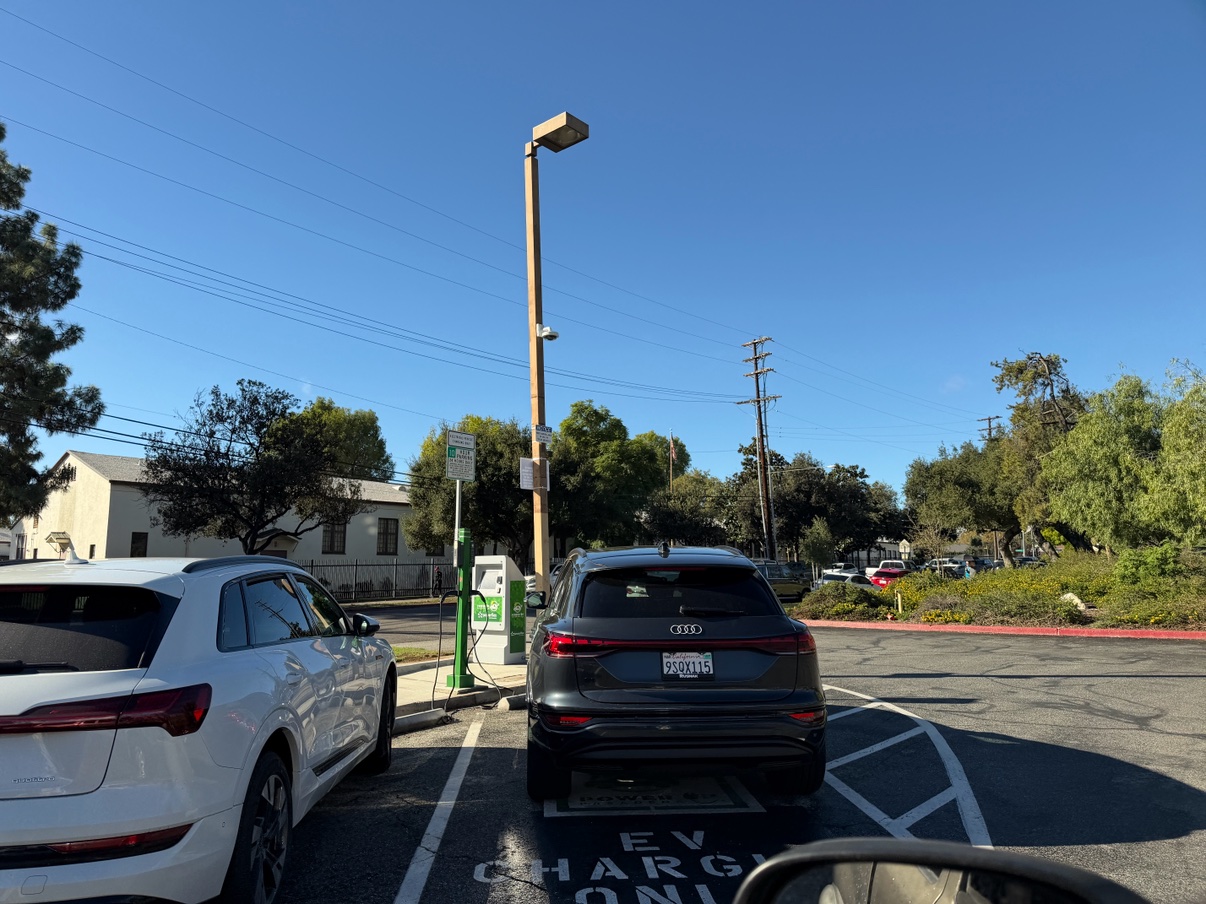
The Victory Park charging lot on Paloma Street on November 14, 2026 — drivers charging again in the open lot. Photo: Victor Caballero.
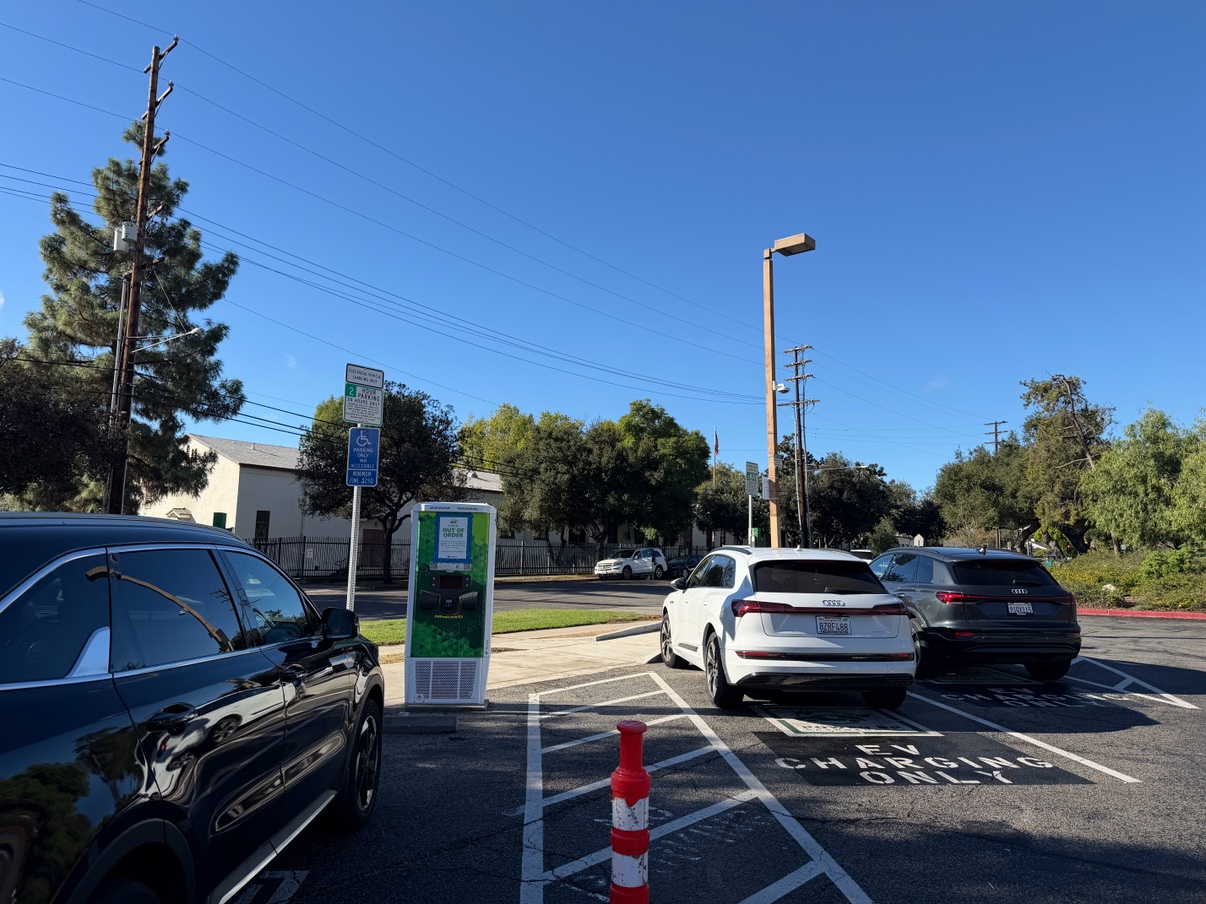
One charger is still posted out of order on November 14, eight days after the cables were cut. Photo: Victor Caballero.
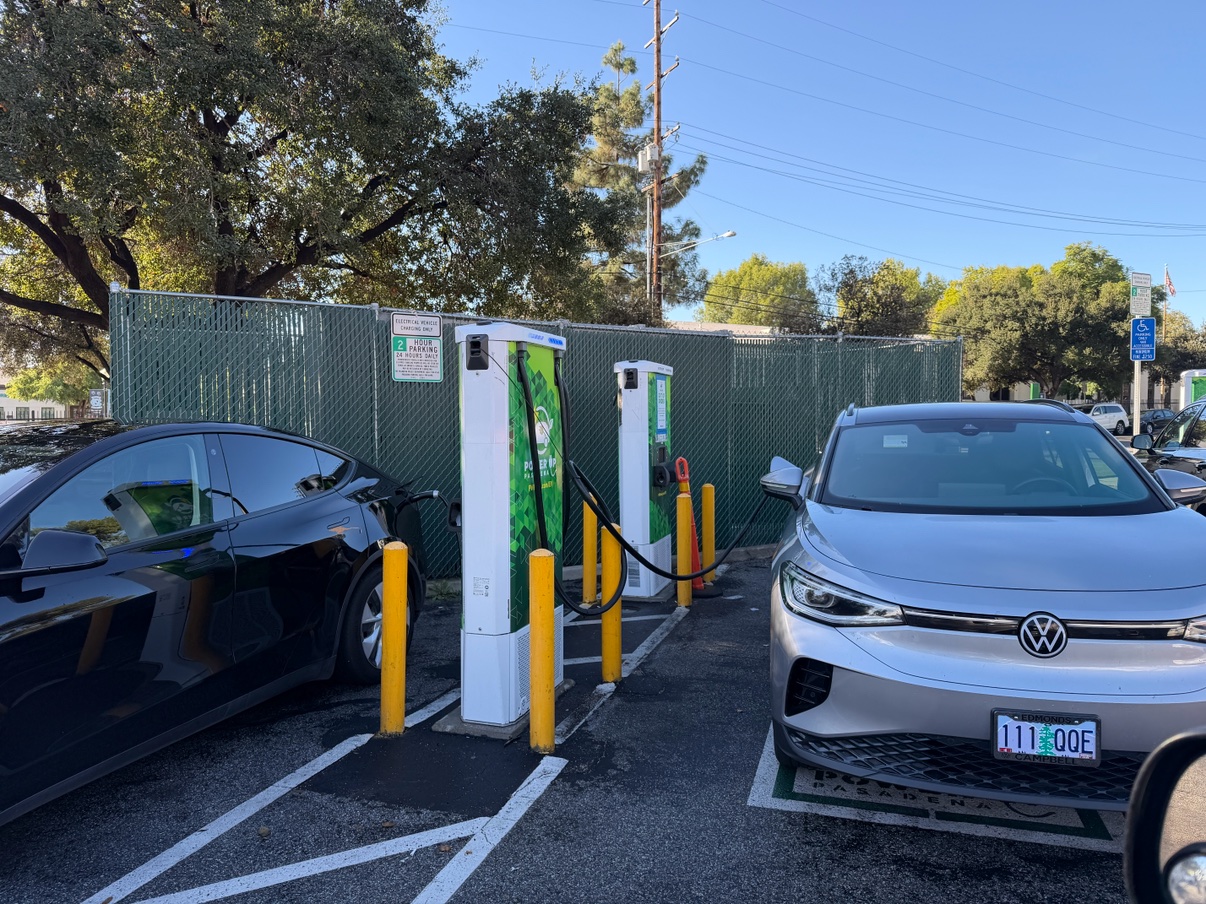
The chargers along the fence at Victory Park, back in use on November 14. Photo: Victor Caballero.
Sources: Pasadena Now, “Copper Thieves Target EV Charging Stations at Victory Park, Causing $30,000 in Damage” (November 2026), via police information; Pasadena Water and Power, “Our Commitment to Enhancing and Maintaining EV Charging Infrastructure” (network history, site inventory, Sept. 25, 2026 status tables, Tritium bankruptcy); Electrify America and ChargePoint cord-theft figures as reported by Bloomberg/Insurance Journal and NPR (2024–2026); City of Pasadena 2026 Homeless Count; Los Angeles Times reporting on the June 2025 park program cancellations.
