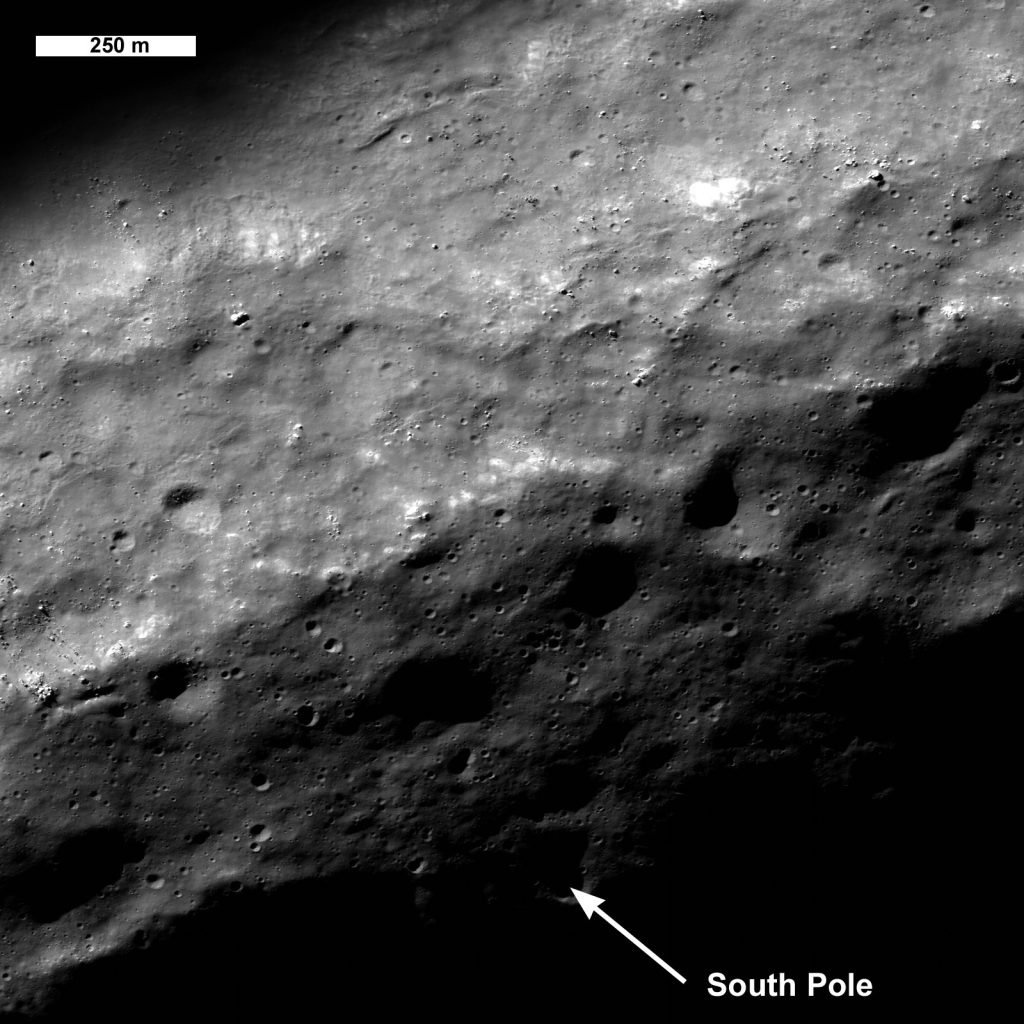
NASA is sending JPL back to the Moon — this time to build the rover that will scout the lunar South Pole for the astronauts who follow. The agency announced on Saturday, November 7, that it is moving forward with PROMISE, a nuclear-powered, six-wheeled rover that the Jet Propulsion Laboratory in Pasadena will manage and build, with a launch targeted for late 2028.
PROMISE stands for Polar Rover for Observation, Mapping, and In-Situ Exploration. It will land at the Moon’s South Pole carrying science instruments and technology demonstrations, characterizing the surface and subsurface, assessing the resource potential of the region, and gathering the data NASA needs to pick landing sites and plan future infrastructure. Because it is nuclear-powered, it can keep working through the long lunar nights and inside permanently shadowed regions thought to harbor ice — the water that would make a sustained human presence on the Moon possible.
Built from Mars rover parts
The rover will be assembled from spare flight components and engineering test models for NASA’s Curiosity and Perseverance Mars rovers. JPL’s bet is that proven hardware, software, and Mars rover operating approaches will cut costs and shorten the schedule for integrating and testing a complex rover. NASA says it has assessed the hardware’s compatibility with the lunar environment and determined it can tolerate the harsh conditions near the Moon’s South Pole.
PROMISE will carry a drill to extract regolith, or lunar dust, from about three feet (one meter) below the surface to characterize ice and other resources, along with spectrometers to analyze the chemical composition of surface material, temperature and radiation sensors, and visible-light cameras. It will also demonstrate a next-generation, radiation-tolerant computing system — NASA’s High Performance Spaceflight Computing — and advanced autonomy sensors and algorithms. The mission is planned to last 18 months.
NASA awarded Blue Origin a $94 million base contract, with an option period worth an additional $140 million based on performance, to deliver PROMISE to the lunar South Pole aboard its Mark 1 lander. The award expands a task order awarded in May 2026 to deliver two lunar terrain vehicles to the Moon, and PROMISE’s delivery is part of the Moon Base campaign’s first phase.
MoonFall drones and the wider Moon Base package
PROMISE was one of two JPL-managed pieces in a sweeping set of Moon Base announcements NASA made at the MAX POWER aerospace expo at Kennedy Space Center in Florida. The other is transportation for the MoonFall lunar drones — a group of highly mobile drones that will survey the lunar surface before astronauts arrive, scouting areas beyond the reach of traditional rovers so that later human missions are safer and better informed.
The rest of the package fills out the logistics of a sustained lunar presence. NASA selected eight companies — Blue Origin, Firefly Aerospace, Intuitive Machines, iSpace US, Lockheed Martin Space, Northrop Grumman Space Systems, SpaceX, and Voyager Technologies — for the next phase of its Commercial Lunar Payload Services initiative, under a new ten-year CLPS 2 contract with a combined maximum value of $10 billion. The agency also raised the value of the current CLPS contract from $2.6 billion to $4.2 billion.
For launch and in-space transportation, NASA awarded six task orders worth about $1.3 billion combined to Arrow Science and Technology, Blue Origin, and Impulse Space under its Venture-Class Acquisition of Dedicated and Rideshare contract. Some of those missions will fly aboard Blue Origin’s New Glenn, Relativity Space’s Terran R, and SpaceX’s Falcon 9 rockets. NASA also selected SpaceX to launch communications satellites aboard a Starship to cislunar space in 2028, a demonstration meant to inform the lunar communications networks that will keep astronauts, mission controllers, and the Moon Base connected.
On the surface, NASA plans to buy commercial components for a Mini-Communications and Solar Tower, awarding Honeybee Robotics for energy storage, Redwire for power generation, and Yank Technologies for wireless power transfer. Engineers at NASA’s Marshall Space Flight Center in Huntsville, Alabama, will assemble and test the systems before they are delivered to the Moon.
What it means for Pasadena
“We are building the Moon Base mission by mission,” said NASA Administrator Jared Isaacman, announcing the awards. “When our astronauts return to the Moon, they will arrive with the first elements of the Moon Base already waiting for them on the surface.”
For JPL, PROMISE is a homecoming of a particular kind: a rover built from the Lab’s own Mars hardware, aimed at a destination the Lab has never driven on. The work lands as JPL celebrates its 90th anniversary and as its new deputy director, Artemis II commander Reid Wiseman, prepares to start on November 30. If the schedule holds, a machine assembled in Pasadena from Curiosity and Perseverance spares will be drilling for ice at the lunar South Pole before the decade is out — and the drones it travels with will have mapped the ground the astronauts will walk on.
Sources: NASA / Jet Propulsion Laboratory, “NASA Awards Moon Base Transportation, Technology, Science Projects,” November 7, 2026; JPL News.
Photo: NASA / Lunar Reconnaissance Orbiter (public domain).
